
Al-Masudi
Polymath historian and geographer of the Abbasid world.

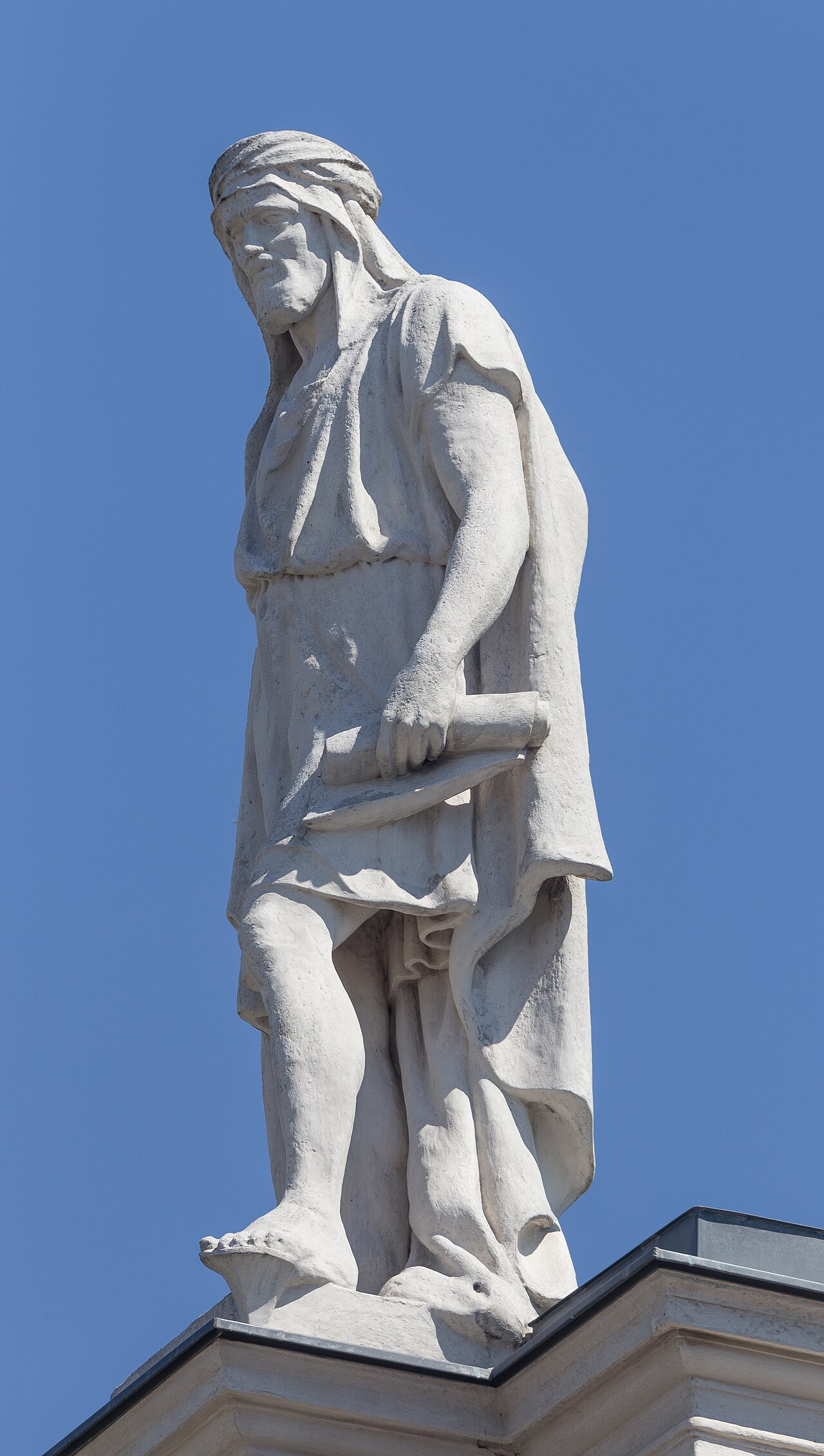
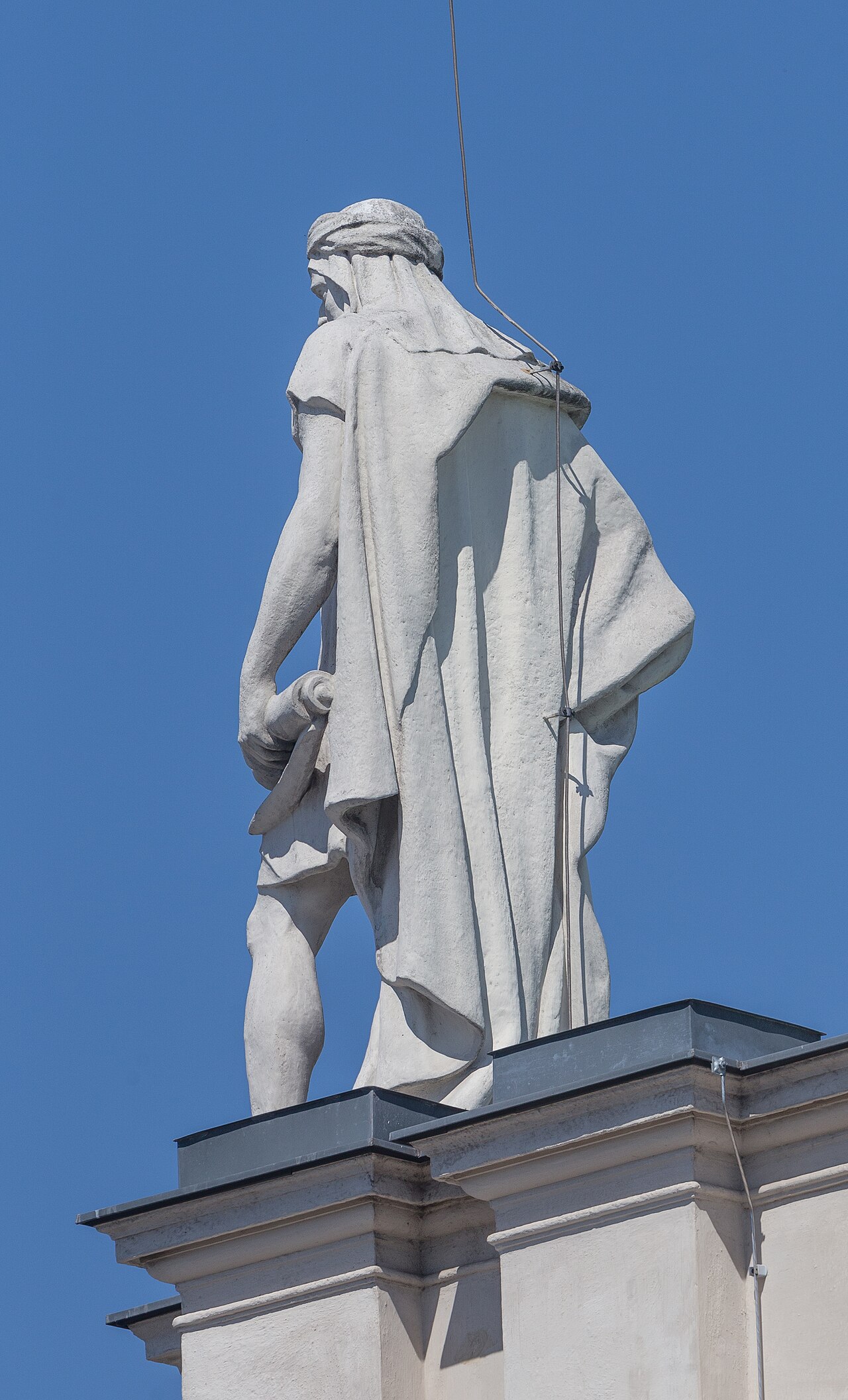
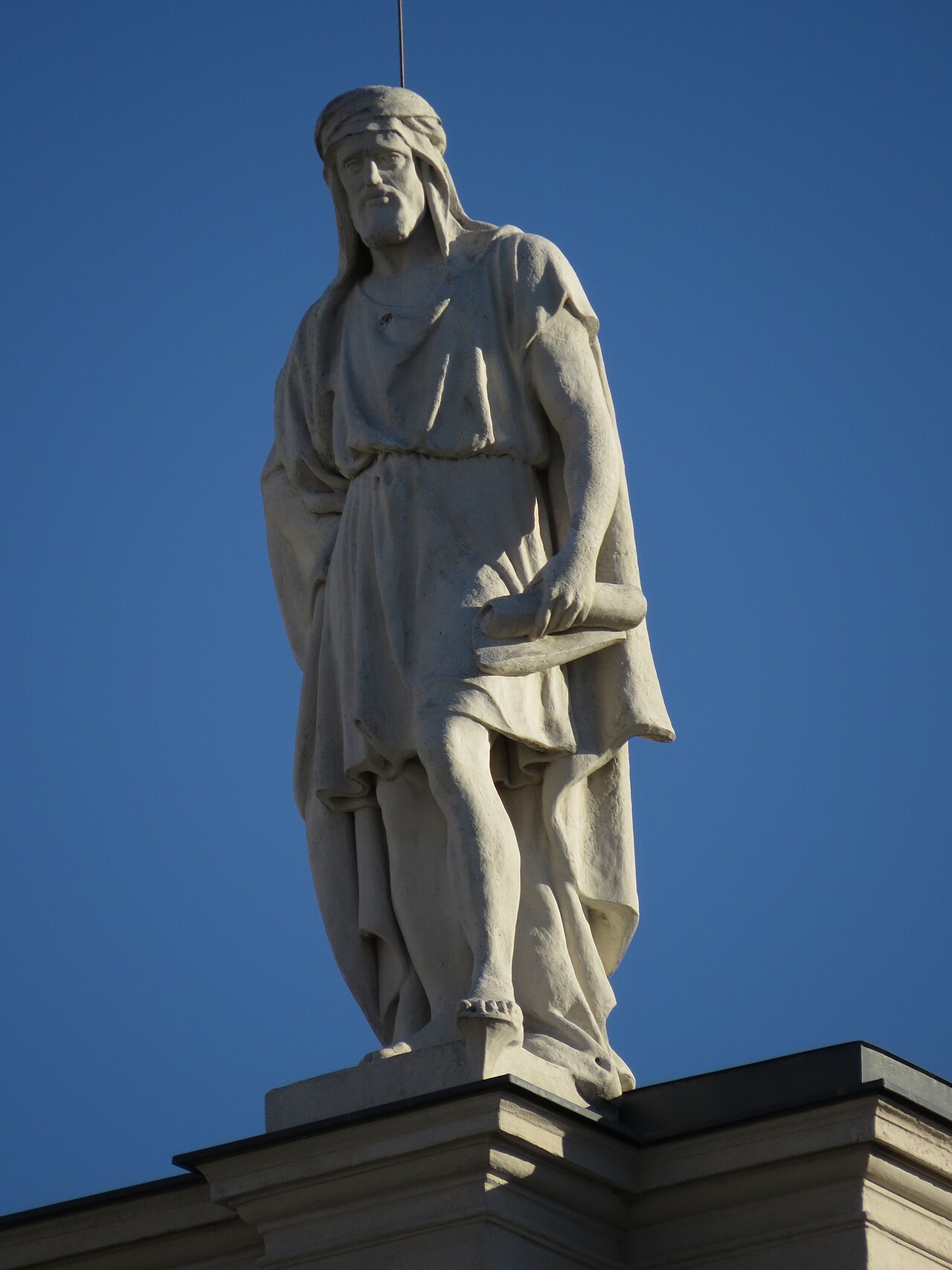
Hubertl · CC BY-SA 4.0
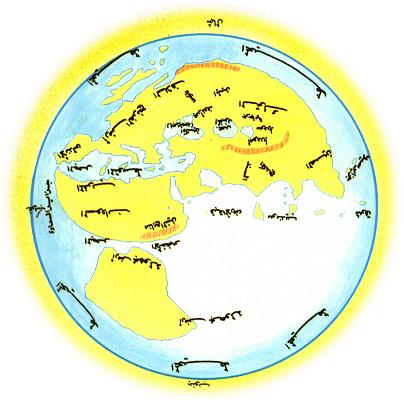
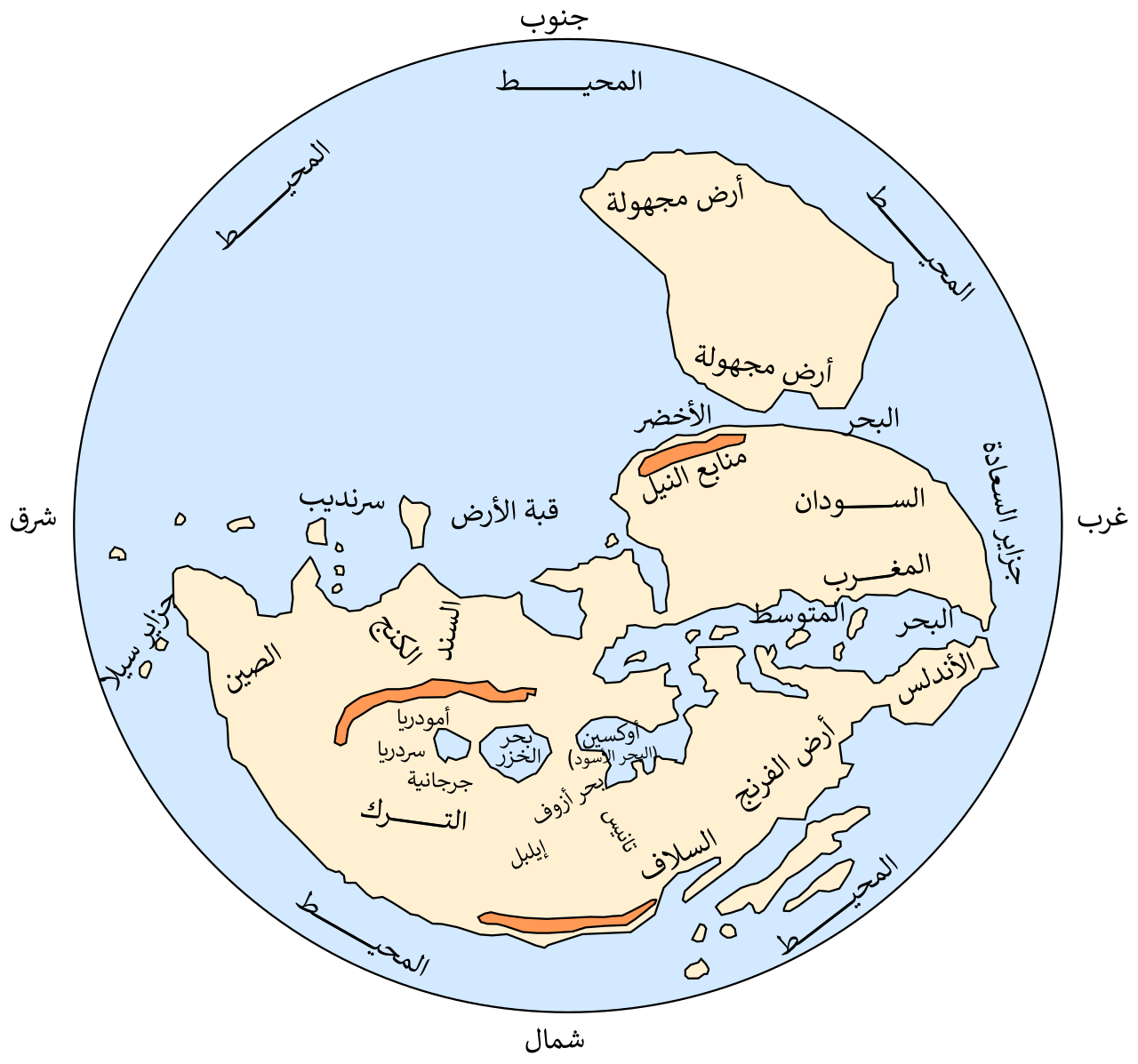
Al-Masʿūdī (c. His magnum opus, *The Meadows of Gold*, combines universal history with scientific geography, social commentary, and biography, reflecting his extensive travels across the Islamic world and beyond.
- field
- History, geography, natural science, philosophy
- nationality
- Arab (Baghdad, Abbasid Caliphate)
- known_for
- Author of *The Meadows of Gold*; extensive travels; called 'Herodotus of the Arabs'
Lore & Background
Al-Masʿūdī was born in Baghdad and descended from Abdullah ibn Masʿud, a companion of the Prophet Muhammad. Little is known of his life beyond his own writings. He sailed the Indian Ocean, Red Sea, Mediterranean, and Caspian Sea, and may have reached Sri Lanka and China, though he also gathered information from travelers like Abu Zayd al-Sirafi and the Byzantine convert Leo of Tripoli. His last years were divided between Syria and Egypt, where he found a Frankish king list written by an Andalusian bishop. Al-Masʿūdī lived in a highly literate era with cheap paper and large libraries. He was a pupil or colleague of prominent intellectuals, including philologists al-Zajjaj, Ibn Duraid, Niftawayh, and ibn Anbari, and was acquainted with poets like Kashajim. He read philosophy, including works of al-Kindi, al-Razi, al-Farabi, and Plato, and was familiar with Galen, Ptolemaic astronomy, and the geography of Marinus. He met jurists of the Shafi'ite and Zahirite schools, and modern scholarship leans toward him being a Zahirite. He knew leading Mu'tazilites, and his reasoning suggests he may have been one, though his extant works do not state this. He included histories of Assyrians, Babylonians, Egyptians, and Persians, and was the only Arab historian to indirectly refer to the kingdom of Urartu.
Reader's Guide
Al-Masʿūdī's significance lies in his comprehensive approach to history and geography, blending universal history with scientific observation and social commentary. His *Meadows of Gold* is a key source for understanding the medieval Islamic world and its interactions with non-Islamic lands. He distinguished himself by his extensive coverage of regions beyond the Abbasid Caliphate, including India, East Africa, and the Byzantine Empire, often based on personal travel. His work reflects the intellectual vibrancy of Abbasid society, where Greek philosophy, Persian literature, and Indian mathematics were studied. He was aware of ancient civilizations and their influence, and he is the earliest extant Arabic author to mention the Roman founding myth of Romulus and Remus. His legacy endures as a polymath who sought to gather 'pearls' of knowledge from East and West, though only a draft of his magnum opus survives. Modern scholarship notes his nuanced understanding of historical change, tracing current conditions to past events.
Did You Know?
- Al-Masʿūdī is sometimes called the 'Herodotus of the Arabs.'
- He traveled to most Persian provinces, Armenia, Georgia, Arabia, Syria, Egypt, India, and East Africa, and sailed the Indian Ocean, Red Sea, Mediterranean, and Caspian.
- He is the only Arab historian to indirectly refer to the kingdom of Urartu, mentioning wars between Assyrians and Armenians.
- He is the earliest extant Arabic author to mention the Roman founding myth of Romulus and Remus.
Architect of a Coherent Islamic Philosophy
Al-Farabi occupies a singular position in the history of thought: he is widely credited as the first Muslim thinker to articulate philosophy as a unified, self-contained system within the Islamic intellectual tradition. Rather than merely transmitting the ideas of his Greco-Roman Neoplatonist and Syriac Aristotelian predecessors, he forged an original philosophical architecture that stretched well beyond their scholastic concerns. His intellectual reach spanned the philosophy of society and religion, the philosophy of language and logic, psychology, epistemology, metaphysics, political philosophy, and ethics. He was also a practiced musician and a serious theorist of music, and though he was not by training a natural scientist, his writings wove in astronomy, mathematics, cosmology, and physics. Later generations honored him with the title "Second Master," placing him directly after Aristotle in the hierarchy of philosophical authority. He is also designated the "Father of Islamic Neoplatonism" and the "Founder of Islamic Political Philosophy," testaments to the breadth and originality of his contributions.
A Life in Motion: Baghdad, Damascus, and the Study of Logic
Reliable biographical details about al-Farabi remain scarce. The earliest sources consist of a brief autobiographical passage in which he traces the lineage of logic and philosophy up to his own era, along with passing references by contemporaries such as al-Masudi, Ibn al-Nadim, and Ibn Hawqal. By the twelfth and thirteenth centuries, Arabic biographers working with so few concrete facts resorted to embellished and invented narratives. What can be pieced together from incidental accounts is that al-Farabi devoted the bulk of his scholarly career to Baghdad, where he immersed himself in the study of logic, medicine, and sociology under the Syriac Christian cleric Yuhanna ibn Haylan. His curriculum progressed through Porphyry's Eisagoge, Aristotle's Categories, and De Interpretatione, continuing up to the Posterior Analytics. He also counted among his intellectual circle the scholars Yahya ibn Adi and Abu Ishaq Ibrahim al-Baghdadi. After his Baghdad period, he traveled to Damascus and Egypt before ultimately returning to Damascus, where he died in the winter of 950 or early 951.
A Bridge Across Civilizations: The Long Shadow of Alpharabius
Al-Farabi's influence radiated outward across centuries and across the boundary between the Islamic and Latin intellectual worlds. In the West he was known by the Latinized name Alpharabius, and his ideas found their way into the work of a remarkable roster of thinkers. Within the Islamic tradition, he shaped the thought of Yahya ibn Adi, Abu Sulayman Sijistani, Abu al-Hassan al-Amiri, and Abu Hayyan al-Tawhidi, and his philosophical framework provided a foundation that Avicenna, Suhrawardi, and Mulla Sadra would later build upon. In the Andalusian and Iberian sphere, his legacy is visible in the work of Avempace, Ibn Tufail, and Averroes. The reach extended further still into Jewish philosophy through Maimonides, into the scholastic tradition through Albertus Magnus, and into modern political thought through Leo Strauss. That a single Central Asian-born thinker could leave such a dense and cross-cultural imprint speaks to the universality of the questions he pursued and the rigor with which he pursued them.
The Enigma of Origins: Persian, Turkic, or Sogdian?
The question of al-Farabi's ethnic and geographic origins has generated centuries of debate, and the inconsistencies among early sources suggest no one with direct knowledge recorded his pedigree during or shortly after his lifetime. His birthplace could be any of several locations in the broad Central Asian region historically called Khurasan: the town of Farab (modern Otrar) on the Syr Darya in Kazakhstan, a village of the same name near Chaharjuy in Turkmenistan along the Silk Road, or Faryab in what is now Afghanistan. The word "farab" itself is a Persian term for land irrigated by diverted river water, and multiple settlements bore that name. Medieval biographers such as Ibn Abi Usaibia and al-Shahrazuri described his father as Persian, and the Georgetown scholar Majid Fakhry identified him as an army captain of Persian extraction. Yet the thirteenth-century historian Ibn Khallikan asserted a Turkic parentage, a claim the Yale Arabist Dimitri Gutas dismisses as a later fabrication. More recent scholarship, including the 2020 assessment by Thérèse-Anne Druart, leans toward a Persian or Iranian-speaking Central Asian background, with Sogdian possibly his native tongue.
Gallery
Frequently Asked Questions
What is The Meadows of Gold?
The Meadows of Gold is Al-Masudi's most celebrated work, blending universal history with scientific geography, social observation, and biographical sketches. It draws heavily on his own extensive travels throughout the Islamic world and beyond.
Why is Al-Masudi called the 'Herodotus of the Arabs'?
The nickname reflects his reputation as a broad-ranging inquirer who combined firsthand travel with wide-ranging scholarship across multiple disciplines. Like Herodotus, he wove together history, geography, and cultural commentary into a single sweeping narrative.
What subjects did Al-Masudi write about?
Beyond history and geography, he produced over twenty works covering theology, natural science, and philosophy. This extraordinary range of output made him one of the most versatile polymaths of the tenth-century Islamic world.
More in Ancient And Medieval Historians And Philosophers 1-18
Spotted an error? Know more?
This is a living reference — every entry is fact-audited, and reader corrections feed straight into our audit queue. Suggest an edit · See this site's audit record