
Apollonius of Tyana
Greek philosopher and miracle worker of Neopythagoreanism.

Wikimedia Commons · CC BY 4.0
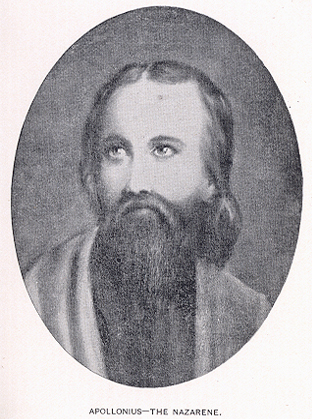
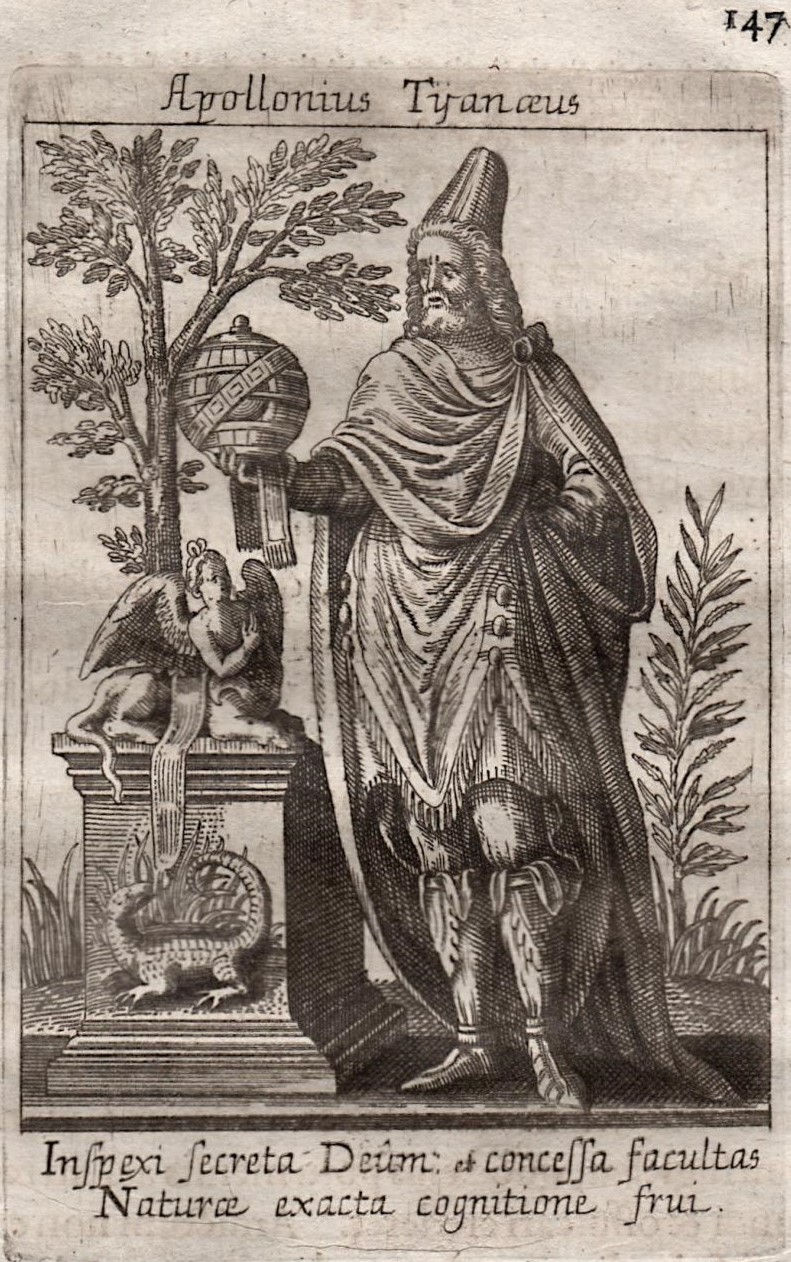
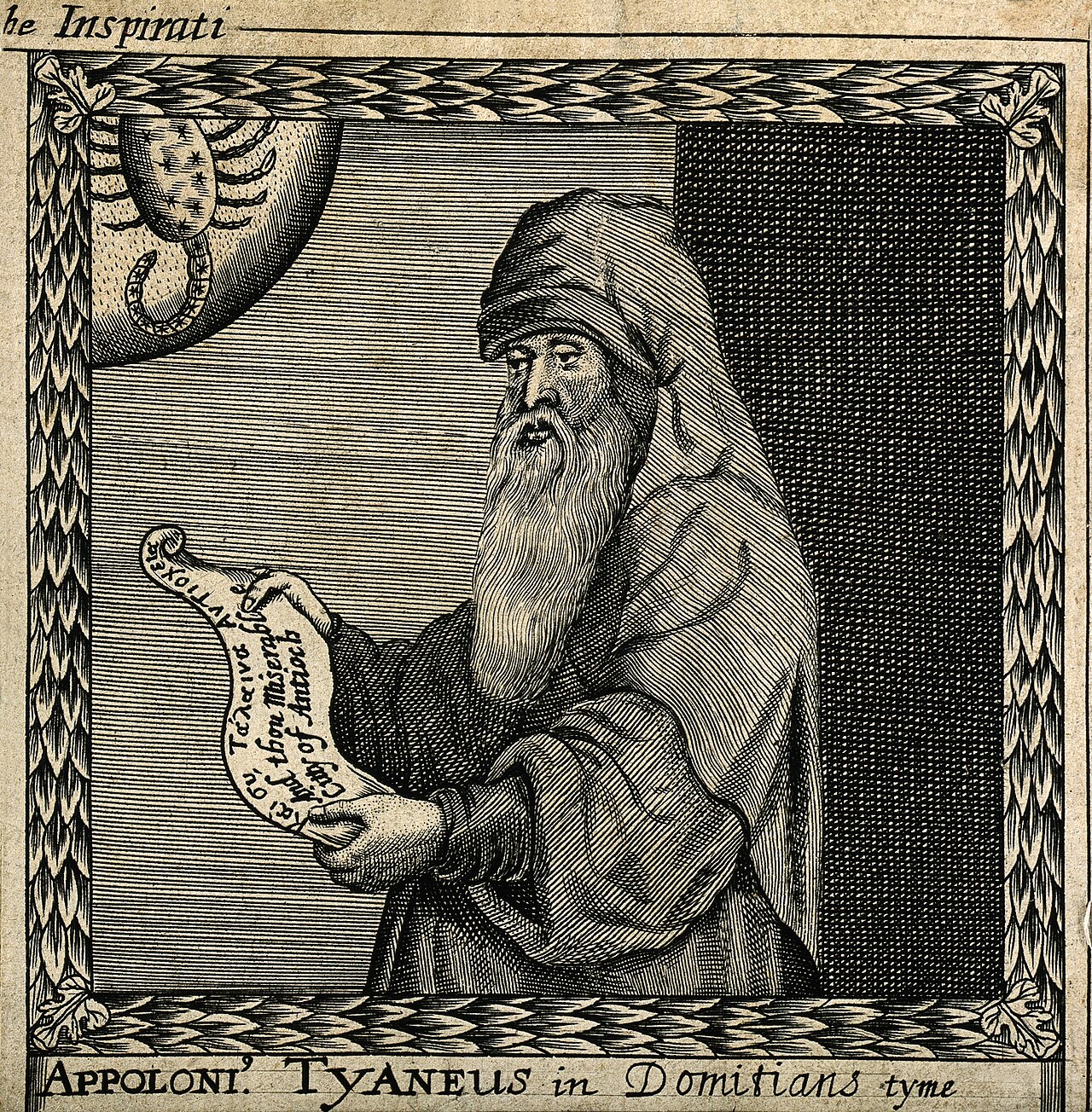
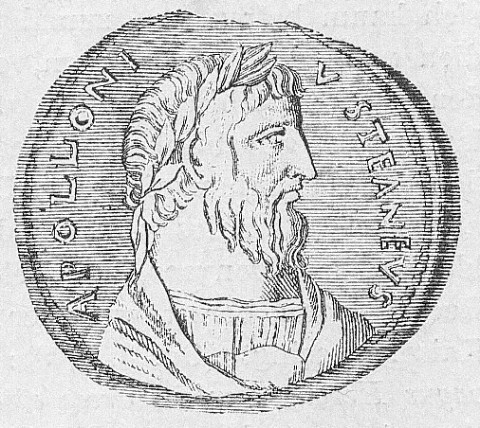
Apollonius of Tyana (c. AD 15 – c. AD 100) is a central figure in Neopythagoreanism and was one of the most famous 'miracle workers' of his day, whose exceptional personality and mystical way of life impressed contemporaries and had a lasting cultural influence.
- born
- c. AD 15 (or c. AD 40 per scholar Maria Dzielska)
- field
- Philosophy, religion
- nationality
- Greek (from Tyana, Cappadocia, Roman Anatolia)
- known_for
- Neopythagoreanism, miracle worker, subject of Philostratus' Life of Apollonius
Lore & Background
Apollonius was born into a respected and wealthy aristocratic Greek household. His primary biographer, Philostratus the Elder, places his life c. 3 BC – c. AD 97, but the Roman historian Cassius Dio writes that Apollonius was in his 40s or 50s in the 90s AD, leading scholar Maria Dzielska to suggest a birth year of about AD 40. He spent his life travelling and teaching in the Middle East, North Africa, and India, and was tried for allegedly using magic to conspire against the emperor; after his acquittal or disappearance from court, his followers believed he underwent heavenly ascension.
Reader's Guide
Apollonius of Tyana is significant as a central figure in Neopythagoreanism and as one of the most famous miracle workers of his era. His life and legends, preserved primarily in Philostratus' Life of Apollonius, shaped his image for posterity and influenced both Roman and Islamic traditions (where he was known as Balinus). The historical reliability of the biography is debated, with some scholars viewing it as largely fictional and commissioned by Empress Julia Domna to popularize Apollonius in Rome. Despite uncertainties, most modern scholars agree that Apollonius existed historically, likely as a wandering ascetic philosopher who opposed animal sacrifice and lived a frugal, vegetarian life. His legacy includes the Adana Inscription, which describes him as a heaven-sent sage and healer, and his teachings on God as pure nous, accessible through intellect.
Did You Know?
- Apollonius was tried for conspiring against the emperor using magic, and after his acquittal or disappearance his followers believed he ascended to heaven.
- His primary biographer, Philostratus, wrote the Life of Apollonius at the request of Empress Julia Domna, wife of Septimius Severus.
- Apollonius was known in the Islamic world as Balinus.
- The Adana Inscription from the 3rd or 4th century AD describes him as a heaven-sent sage and healer.
The Wandering Sage of the Eastern Empire
Apollonius of Tyana, born around AD 15 (though some scholars place his birth closer to AD 40) into a wealthy aristocratic Greek family in Tyana, Cappadocia, became one of the most recognizable figures of the early Roman Empire. A committed Pythagorean, he rejected animal sacrifice and maintained a strictly vegetarian, frugal diet in line with his philosophical tradition. His life was defined by constant movement: he wandered through Asia Minor, northern Syria, and—according to the accounts that survive—extended his travels to Italy, Spain, North Africa, Mesopotamia, India, and even Ethiopia. His lifelong companion Damis accompanied him on these journeys, serving as both student and chronicler. Whether he truly reached as far as India or Rome remains debated, but even the most conservative scholars acknowledge him as a wandering ascetic and wonder-worker of a type well known in the eastern provinces. His philosophical writings, including a fragment on sacrifice, reveal a thinker who believed God was pure intellect, unreachable through ritual but accessible through spiritual contemplation.
The Trial Before Domitian
The most dramatic episode in Apollonius's story is his confrontation with the Roman state. According to the surviving accounts, he was summoned before the court of Emperor Domitian as a defendant, accused of conspiring against the emperor, performing human sacrifice, and predicting a plague through the use of magic. Rather than submitting to imperial authority, Apollonius reportedly defied the emperor in blunt, unflinching terms. The charges led to his conviction and a death sentence. What happened next divided his followers from his detractors: his adherents believed that rather than dying, Apollonius underwent a heavenly ascension, rising into the sky and leaving this world behind. The Adana Inscription, a later Greek text from the third or fourth century, echoes this tradition, declaring that while his physical body was buried in Tyana, heaven itself received him so that he might continue to relieve human suffering. Most modern scholars of antiquity accept that Apollonius was a real historical figure, though the precise details of his trial and its outcome remain entangled with legend.
The Philostratus Problem and the Question of Sources
Nearly everything we know about Apollonius flows through a single, massive text: the Life of Apollonius of Tyana, composed by the sophist Philostratus the Elder in the 220s or 230s AD at the commission of Empress Julia Domna. This novelistic biography, completed after Julia Domna's death in AD 217, drew on older materials that have since been lost, including a biography by Moiragenes and a report by the imperial secretary Maximus about Apollonius's activities in Aegae. Philostratus also claimed access to the personal notebooks of Damis, Apollonius's devoted companion, though scholars remain divided on whether those memoirs were genuine, a forgery, or an invention of Philostratus himself. Some researchers argue that Julia Domna, a Syrian by origin, deliberately commissioned the biography to elevate Apollonius as a fearless sage whose powers surpassed even Pythagoras's, effectively manufacturing a cultural hero for Rome. Her son Caracalla and possibly her grandnephew Severus Alexander are said to have worshipped him, lending political weight to the legend. The reliability of every detail thus hinges on how much trust one places in Philostratus and his sources.
A Legacy That Crossed Civilizations
Apollonius's influence stretched far beyond his own lifetime and even beyond the Greco-Roman world. He stands as a central pillar of Neopythagoreanism, and his mystical, exemplary way of life left a mark on cultural imagination for centuries. The Adana Inscription, likely originating from Cilicia, preserved his memory in poetic Greek verse, celebrating him as a heaven-sent healer and a new Pythagoras who extinguished the faults of men. His reputation also crossed into the Islamic world, where he was known by the name Balinus, testifying to how deeply his story had penetrated neighboring religious traditions. In the Roman imperial family, his veneration was not merely literary: Caracalla is recorded as having worshipped him, and Severus Alexander may have done the same, suggesting that Apollonius occupied a quasi-sacred niche in certain elite circles. Whether one reads him as a genuine philosopher, a legendary wonder-worker, or a literary construct shaped by imperial patronage, Apollonius of Tyana endures as a figure whose story has been retold, reinterpreted, and revered across multiple civilizations for nearly two millennia.
Gallery
Frequently Asked Questions
What are Apollonius of Tyana's powers or role?
Contemporaries described him as a remarkable miracle worker who performed feats of healing, prophecy, and spiritual intervention. His role blended Neopythagorean philosophy with a deeply ascetic, mystical way of life that set him apart from other Roman-era thinkers.
Why is Apollonius of Tyana important?
He ranks among the most widely known miracle workers of the ancient world, and his persona shaped how later cultures imagined philosopher-saints and ascetic heroes. His story also provided a non-Christian counter-narrative that influenced both pagan and early Christian literary traditions.
Who wrote the main surviving account of Apollonius of Tyana?
The principal source is Philostratus of Athens, who composed the Vita Apollonii (Life of Apollonius) in the early third century AD. That text is the foundation for nearly everything modern readers know about his teachings, travels, and reputed miracles.
More in Ancient And Medieval Historians And Philosophers 1-18
Spotted an error? Know more?
This is a living reference — every entry is fact-audited, and reader corrections feed straight into our audit queue. Suggest an edit · See this site's audit record